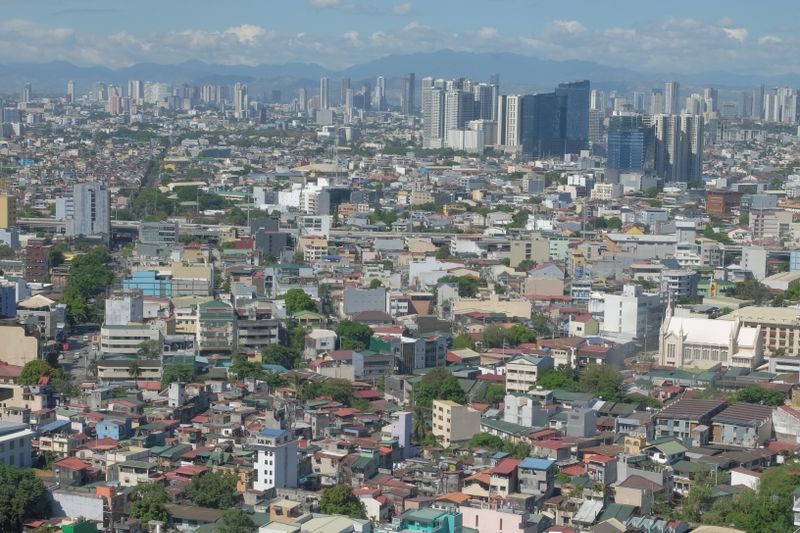
The 2024 baseline: $38 billion and 1.82 million jobs
The Philippine IT-BPM industry ended 2024 with $38 billion in revenue and 1.82 million employees, according to figures released by IBPAP president and chief executive officer Jack Madrid in January 2025. Both numbers grew seven percent over 2023, when the industry recorded $35.5 billion in revenue and 1.7 million workers. Madrid attributed the result to global demand led by US businesses, with banking, financial services and health care the strongest client sectors.
IBPAP confirmed the same totals in its own announcement the same month. These are the anchor figures for the BPO industry in the Philippines, and this page treats them as canonical. Every other employment or revenue number in circulation should be checked against them, because several widely repeated figures do not match, as the reconciliation section below shows.
The verified series, and why it is short
Our standing rule is simple. Every figure published here must carry a source URL, a retrieval date and a confidence score, and a figure with no qualifying source does not get published. Applied to the historical record, that rule currently leaves three verified rows. The 2004 to 2022 rows are being checked against original IBPAP and BPAP annual reports and will be added one at a time as each clears the threshold. A short series that is right beats a long one that is not.
- 2023: $35.5 billion in revenue and 1.7 million employees (IBPAP figures via Philstar, retrieved 2026-08-03, confidence 0.85).
- 2024: $38 billion in revenue and 1.82 million employees (Philstar and IBPAP's announcement, retrieved 2026-08-03, confidence 0.85).
- 2025: revenue above $40 billion, per IBPAP figures reported by ABS-CBN News in January 2026 (retrieved 2026-08-03, confidence 0.78). No 2025 headcount actual has yet cleared our threshold; the association's stated goal was 1.9 million by year end.
The 2028 roadmap tracker
The IT-BPM Industry Roadmap 2028 set an aggressive target of $59 billion in annual revenue and 2.5 million jobs by 2028. The same roadmap set a 2024 milestone of $40 billion and 1.84 million. The industry landed at $38 billion and 1.82 million, above its baseline scenario but below the aggressive track.
By mid-2025 the association had recalibrated. "We have grown to 1.82 million in 2024 and will hit 1.9 million by the end of 2025. What we will also hit in 2025 is $40 billion in export revenue," Madrid said at a press briefing reported by BusinessWorld, adding that the industry was exceeding its baseline targets but running slightly below its aggressive ones. That works out to 5 percent revenue growth and 4 percent job growth in a year when the global industry grew 3 percent.
Earlier in 2025, IBPAP told the Inquirer it expected $40 billion in revenue for the year, growth of about 5.2 percent, and set a target of 2 million jobs within 12 to 18 months. It also announced a mid-term review of the roadmap. That review is the item to watch. It will decide whether $59 billion and 2.5 million survive as official 2028 targets or get formally revised. The 2025 revenue result, above $40 billion, kept the baseline track intact; no revised 2028 figures have yet been published by a source that clears our threshold, and this tracker will be updated the day they are.
Reconciling the conflicting headcount figures
Search for Philippine call center industry statistics and you will find at least three employment figures presented as current. They are not interchangeable, and only one is an official actual.
- 1.82 million is the official 2024 year-end count, reported by IBPAP through the press and its own channels. This is the correct figure for 2024 actuals.
- 1.9 million is a projection, not an actual. It is the end-2025 figure Madrid said the industry "will hit" at the June 2025 briefing. Quoting it as a current headcount converts a target into a fact.
- 1.68 million appears on vendor blogs, most prominently a Magellan Solutions report citing the Customer Xperience Association of the Philippines. That series also puts 2024 revenue at $31.7 billion and estimates $33.9 billion for 2025, several billion below IBPAP's $38 billion actual and above-$40 billion result. The most plausible explanation is scope: a contact center and customer experience measure rather than the full IT-BPM industry. We score this series 0.60 and cite it only to document the discrepancy.
The practical rule for a briefing paper or news story: use 1.82 million for 2024 actuals, label 1.9 million as the end-2025 target, and never splice the CXAP series into IBPAP's without flagging the change of scope. Mixing the two series in one chart is exactly how mismatched numbers spread across the web.
GDP contribution and global position
Madrid told the Inquirer that at $40 billion the industry would contribute at least 8 percent of the Philippine economy. The vendor-published CXAP series estimates 8.5 percent of GDP and around 16 percent of the global market; because that series' revenue base conflicts with IBPAP's, we carry both estimates at different confidence levels rather than blending them. The cleanest comparative data point is growth: Philippine revenue grew 5 percent in 2025 against 3 percent for the global industry, which is the strongest single piece of evidence that the country is holding its position.
How this page stays current
This hub exists because the numbers in circulation disagree, and because most pages that publish them do not say where they came from. Every figure above carries a source link, a retrieval date of 2026-08-03 and a confidence score. Next additions, in order: the 2004 to 2022 revenue and employment rows once verified against archival IBPAP reports, PEZA locator and investment counts, PSA labour force cross-checks, and the outcome of the roadmap mid-term review. Updates are logged on our industry news page. If a figure you have seen elsewhere is missing here, it is missing because no source for it cleared our threshold.