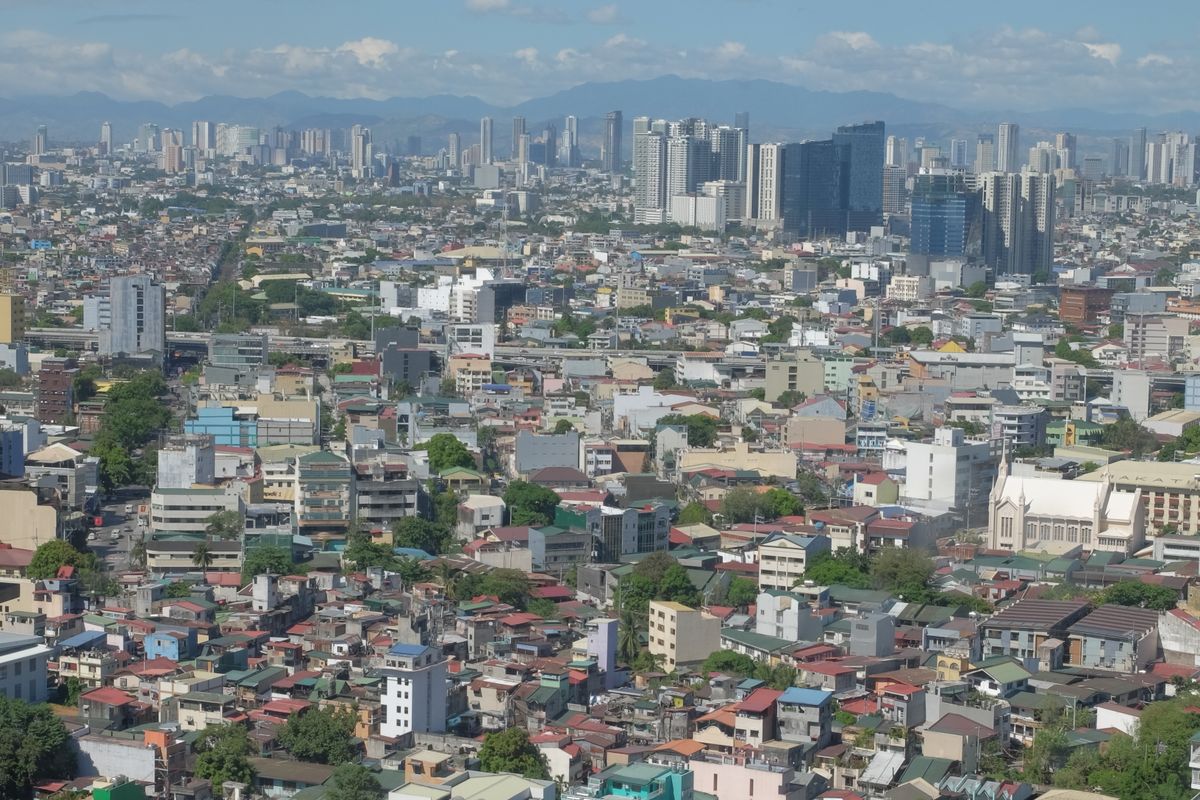
Since mid-2025, three US legislative proposals and one regulatory push have targeted offshore call center work, and each one made headlines in Manila. The question that matters for the Philippine BPO industry is not whether these measures exist. It is how far each has actually moved, and what the sector's exposure would be if any of them became law. The official record, checked on 6 August 2026, gives a clearer answer than the coverage suggests.
Back to News
BPOAI Feature / Philippine BPO Industry
Offshore Call Center Bills and Philippine BPO: The Real Risk
US offshore call center bills remain stuck in committee, but Philippine BPO exposure is real: 84 percent of sector revenue now comes from voice work.
Share on LinkedIn
“I don't know the likelihood of this passing. Obviously it is something we are monitoring.”Madrid
- 84 percenttotal IT-BPM revenue
- 25 percenttax on payments to foreign workers serving US clients
- 40 billion dollarsin 2025
- 89 percentindustry workforce
Bill statuses were retrieved on 2026-08-06 from US Government Publishing Office bulk-data bill status records (Library of Congress data) for S.2495, H.R.4954, S.2976, S.4300 and H.R.2909, and reflect each record's latest action as published.
01 / 05
Three bills and an FCC proposal, none past first base
70 percent
IBPAP members are North American
The most cited measure is the Keep Call Centers in America Act of 2025. The Senate version, S.2495, was introduced by Senator Ruben Gallego of Arizona on 29 July 2025 with one cosponsor, Senator Jim Justice of West Virginia, and referred to the Senate Commerce Committee. The identical House version, H.R.4954, was introduced by Representative Kristen McDonald Rivet of Michigan on 12 August 2025 and referred to four committees. The bill would require agents to disclose their location at the start of a call, give consumers the right to demand transfer to a US-based human agent, including when AI handles the call, and place companies that move call center work overseas on a Department of Labor list that blocks new federal grants and guaranteed loans for up to five years.
The second measure is Senator Bernie Moreno's HIRE Act, S.2976, introduced on 6 October 2025 and referred to the Senate Finance Committee. As Inquirer USA reported, it would impose a 25 percent tax on payments to foreign workers serving US clients, with proceeds funding domestic job training.
Separately, Tech Pilipinas reported in June 2026 on a Federal Communications Commission proposal that pairs incentives for domestic call centers with location disclosure rules and English proficiency requirements. The public comment period closed on 22 June 2026, and no implementation date has been announced.
02 / 05
The legislative record favors the skeptics
Status matters, and as of 6 August 2026 every one of these bills remains exactly where it started. S.2495's last recorded action is its committee referral of 29 July 2025. H.R.4954's bill status record was updated by the Library of Congress as recently as 4 August 2026, and its latest action is still the referral of 12 August 2025, though it has attracted 16 cosponsors. The HIRE Act shows no cosponsors at all and no action since its referral to the Finance Committee.
History gives the same signal. Congress has seen versions of this idea for more than a decade. The United States Call Center Worker and Consumer Protection Act of 2013 got no further than a subcommittee referral in September 2013. Its most recent predecessor, S.4300 of 2024, was referred to the Senate Commerce Committee on 9 May 2024 and recorded no further action before the 118th Congress ended. Bills that do not pass by the end of a Congress die and must be reintroduced. The current Congress ends in early January 2027, which sets a hard deadline for all three pending measures.
03 / 05
The exposure is real and concentrated in voice services
None of this means the risk is imaginary. The Philippine IT-BPM sector earned above 40 billion dollars in 2025 and employed 1.9 million people, according to figures announced by IBPAP president Jack Madrid and reported by The Philippine Star, with a 2026 target of 42 billion dollars and 1.97 million jobs.
The voice segment carries most of that weight. Per CXAP figures reported in May 2026, contact centers generated 33.9 billion dollars in 2025, or 84 percent of total IT-BPM revenue, and employed 1.68 million full-time workers, 89 percent of the industry workforce. BusinessWorld notes that 70 percent of IBPAP members are North American or serve North American clients, and Inquirer USA reports that US clients account for the majority of outsourcing contracts.
Put those figures together and the theoretical ceiling on exposed headcount is the 1.68 million contact center workers, most of whom serve US accounts. The realistic near-term exposure is far narrower. The Keep Call Centers in America Act does not ban offshoring; its lever is eligibility for federal grants and guaranteed loans, which only bites for clients that hold or want them, plus disclosure rules that raise friction on every call. The HIRE Act is the sharper instrument because a 25 percent excise tax would touch every outsourcing payment, not just federal contractors. It is also the bill with the least congressional support so far.
04 / 05
Manila is lobbying, diversifying, and lowering its own targets
The Philippine response has moved on three tracks. Ambassador Jose Manuel Romualdez has said Manila is working with US lawmakers to seek exemptions for the Philippines, and the House of Representatives filed a resolution on 20 October 2025 directing trade and foreign affairs officials to consult with their US counterparts, per Inquirer USA. Trade Secretary Cristina Roque has pressed for diversification beyond US clients.
Industry voices are measured. Madrid told BusinessWorld the group is still studying the call center bill: "I don't know the likelihood of this passing. Obviously it is something we are monitoring." Economist John Paolo Rivera of the Philippine Institute for Development Studies called the bill a clear risk to the call center segment while noting the industry's shift into healthcare information management, finance, and software services that the bill does not reach. RCBC economist Michael Ricafort added a twist worth sitting with: cost pressure from any US penalty could push clients toward AI rather than toward US-based agents.
The sector is also recalibrating for reasons beyond Washington. In July 2026, IBPAP cut its 2028 roadmap targets from 59 billion dollars and 2.5 million jobs to a best case of 50.5 billion dollars and 2.14 million jobs, with a downside employment case of 1.85 million, citing AI, shifting buyer behavior, and competition. US legislation was not listed among the primary reasons.
05 / 05
What to watch through January 2027
Four signals would change this assessment. First, a committee hearing or markup on any of the three bills, since none has had one. Second, cosponsor growth, which is currently visible only on H.R.4954. Third, FCC action following the June 2026 comment period, because a regulation does not need a floor vote. Fourth, client behavior in earnings disclosures: Concentrix reported fiscal 2025 revenue of 9.83 billion dollars, up 2.2 percent, with delivery spread across more than 70 markets, a reminder that the largest providers are structured to shift work between geographies if rules change.
The sober reading: as of 6 August 2026, no US offshore call center bill has advanced past introduction, and a decade of predecessors died in committee. The exposure if that pattern breaks is heavily concentrated in the voice segment that still produces 84 percent of Philippine IT-BPM revenue. That combination, low probability against high concentration, is why the industry is watching committee calendars rather than panicking. We track these bills as they move in our industry news coverage.
Further reading
Philippine BPOs with AI-readiness tiers that are checked, not claimed.Browse the BPO directory
13Sources and methodologyEvery figure on this page carries a source URL, retrieval date, and confidence score
Bill statuses were retrieved on 2026-08-06 from US Government Publishing Office bulk-data bill status records (Library of Congress data) for S.2495, H.R.4954, S.2976, S.4300 and H.R.2909, and reflect each record's latest action as published. Industry figures come from Philippine press reports of IBPAP and CXAP announcements and from the Concentrix investor release, all fetched on the same date. Confidence scores follow the site standard: official registry records 0.90 to 0.98, third-party press 0.75 to 0.89, and the exposed-headcount ceiling is an inferred estimate capped at 0.70.
- 01S.2495 Keep Call Centers in America Act introduced 2025-07-29 by Sen. Ruben Gallego (D-AZ) with one cosponsor (Sen. Jim Justice, R-WV); latest action remains referral to Senate Commerce Committee; provisions include location disclosure, right to transfer to a US-based human agent (including from AI), and federal grant/loan ineligibility listGPO govinfo bulk data, bill status S.2495 (119th Congress) · retrieved 2026-08-06 · confidence 0.97 · Record update date 2026-04-22; CRS summary included in record
- 02H.R.4954 introduced 2025-08-12 by Rep. Kristen McDonald Rivet (D-MI-8), 16 cosponsors, referred to four House committees; latest action still the referral; record updated 2026-08-04GPO govinfo bulk data, bill status H.R.4954 (119th Congress) · retrieved 2026-08-06 · confidence 0.97
- 03S.2976 (HIRE Act) introduced 2025-10-06 by Sen. Bernie Moreno (R-OH), zero cosponsors, referred to Senate Finance Committee with no further action recordedGPO govinfo bulk data, bill status S.2976 (119th Congress) · retrieved 2026-08-06 · confidence 0.97 · Record update date 2026-03-09
- 04Predecessor bill S.4300, US Call Center Worker and Consumer Protection Act of 2024, referred to Senate Commerce Committee 2024-05-09 with no further recorded action before the 118th Congress endedGPO govinfo bulk data, bill status S.4300 (118th Congress) · retrieved 2026-08-06 · confidence 0.96
- 05H.R.2909, US Call Center Worker and Consumer Protection Act of 2013, introduced 2013-08-01; latest action a subcommittee referral on 2013-09-13, evidencing more than a decade of similar bills dying in committeeGPO govinfo bulk data, bill status H.R.2909 (113th Congress) · retrieved 2026-08-06 · confidence 0.96
- 06HIRE Act would impose a 25% tax on payments to foreign workers serving US clients; Amb. Jose Manuel Romualdez seeking PH exemptions; PH House resolution filed 2025-10-20; Trade Sec. Cristina Roque urging market diversification; US clients account for the majority of outsourcing contractsInquirer USA, 'Proposed US laws could threaten BPO jobs in PH' (2025-10-27) · retrieved 2026-08-06 · confidence 0.82
- 07IBPAP president Madrid on the Keep Call Centers bill: 'I don't know the likelihood of this passing. Obviously it is something we are monitoring'; PIDS economist John Paolo Rivera calls it a clear risk to the call center segment; RCBC economist Michael Ricafort notes US penalties could accelerate AI substitution; 70% of IBPAP members are North American or serve North American clientsBusinessWorld, 'BPOs still evaluating potential impact of US bill requiring reshoring of call centers' (2025-08-14) · retrieved 2026-08-06 · confidence 0.85
- 08PH IT-BPM 2025 revenue above $40 billion (up 5% from $38 billion in 2024) and 1.9 million workers (up 4%); 2026 targets $42 billion and 1.97 million jobs, per IBPAP president Jack MadridThe Philippine Star, 'IT-BPM revenues breach $40 billion mark' (2026-01-29) · retrieved 2026-08-06 · confidence 0.85
- 09Contact centers earned $33.9 billion in 2025 (84% of the $40.3 billion IT-BPM total) with 1.68 million full-time employees (89% of the IT-BPM workforce); 2026 projection $35.7 billion and 1.73 million workers; CXAP lists 'policies in Western countries' among 2026 risk factorsThe Philippine Star, 'Contact center industry eyes 5% revenue growth in 2026' (2026-05-31) · retrieved 2026-08-06 · confidence 0.85
- 10IBPAP cut 2028 roadmap targets from $59 billion revenue and 2.5 million jobs to a $50.5 billion best case and 2.14 million jobs (1.85 million downside), announced 2026-07-14, citing AI, buyer behavior shifts, competition and policy concernsGMA News Online, 'IBPAP cuts 2028 IT-BPM revenue, jobs forecasts after roadmap review' (2026-07-14) · retrieved 2026-08-06 · confidence 0.85
- 11FCC proposal pairs incentives for domestic call centers with location disclosure and English proficiency requirements; public comment period closed 2026-06-22; no implementation date announced; Amb. Romualdez lobbying Congress on related legislationTech Pilipinas, 'US FCC proposal to curb offshore call centers rattles Philippine BPO workers' (2026-06-22) · retrieved 2026-08-06 · confidence 0.75
- 12Concentrix fiscal 2025 revenue $9,825.8 million, up 2.2% year over year, with operations across 70+ marketsConcentrix investor relations, Q4 and fiscal year 2025 results (2026-01-13) · retrieved 2026-08-06 · confidence 0.90
- 13Theoretical ceiling on PH workers exposed to US offshore call center legislation is the 1.68 million contact-center FTEs, most serving US accounts; realistic near-term exposure is narrower because the Keep Call Centers Act's lever is limited to federal grant/loan eligibility and disclosureBPO AI analysis of CXAP, IBPAP and congressional-record figures · retrieved 2026-08-06 · confidence 0.65 · Inferred estimate combining sourced figures; not a measured count
Confidence scale: 0.90–0.98 registry or official data, 0.75–0.89 third-party aggregated, 0.50–0.74 self-attested. Figures that could not be sourced were removed rather than published.